Flawless, immediate
cardiovascular intervention
for every patient, everywhere.














%205.svg)

We could show you — but why not just operate the world's first and only endovascular robot yourself, right from where you're sitting now?


Our first robot drives through a vascular model while being controlled from 500 miles away.
Successful robotic procedures in animals from 8,000 miles away - a world first.
Fully autonomous endovascular navigation in vascular models - another world first.
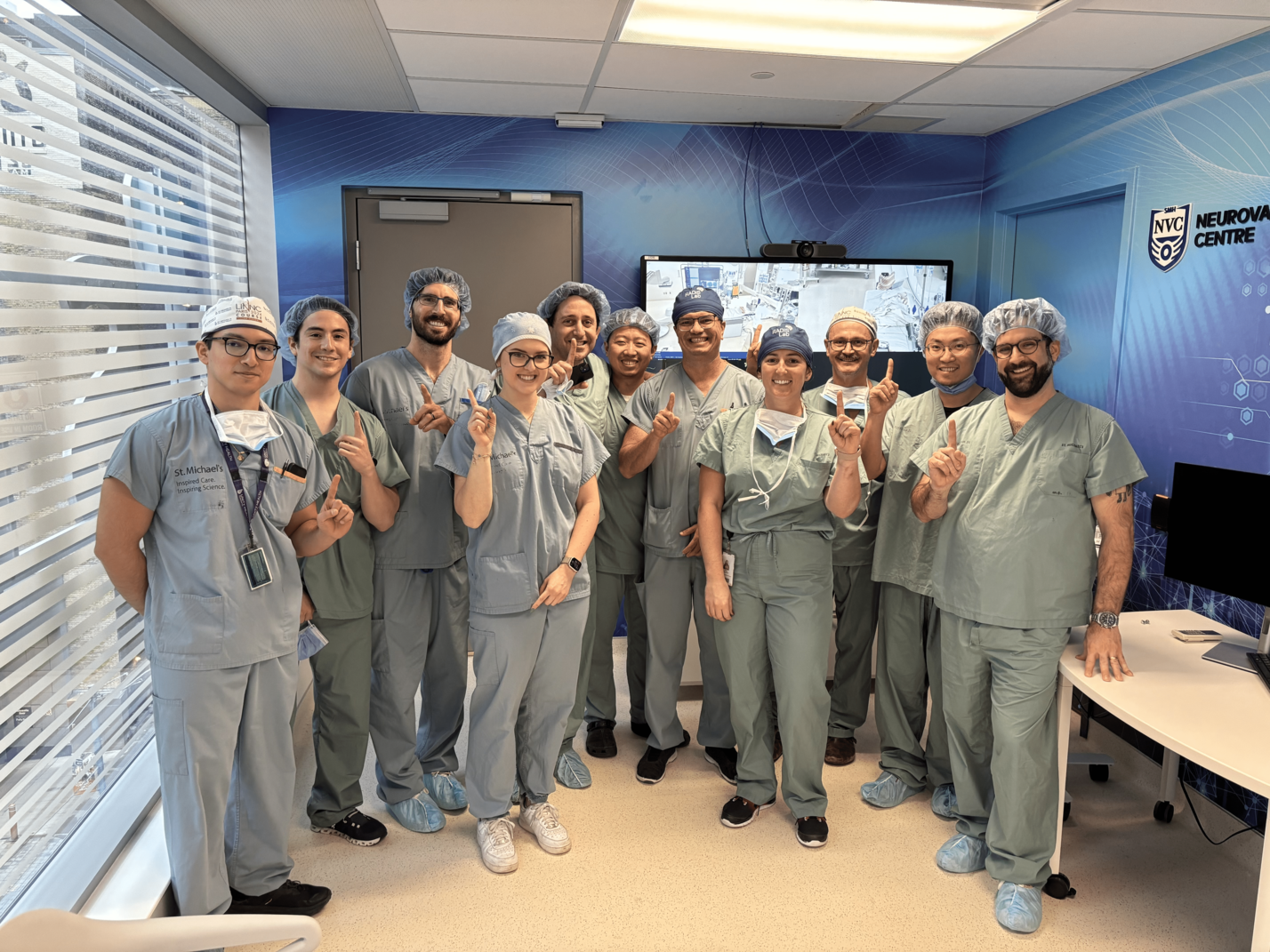
The world's first fully robotic neurointerventional procedure in a human.
The world's first fully remote neurointerventional procedures with the clinician in a separate hospital to the patient.
Heads down preparing for our pivotal clinical trials.
Remedy brings together visionary clinicians and world-class engineers to solve healthcare's biggest challenges.
We are a new generation of surgical robotics company combining deep medical expertise with cutting-edge technical innovation to transform patient care
Our workplace is stimulating, mission driven and fun. We strive to be the company you want to work for.
You'll take ownership of the electrical system across Remedy's surgical robot platform — the boards, the architecture, and the path to production. You'll design, build, and bring up the boards that drive our motors, manage sensing, and tie together the electromechanical system — from schematic capture through board bring-up and production handoff. You'll work closely with our mechanical, firmware, and systems teams to ship hardware that meets medical device standards.
We’re looking for a motivated, senior mechanical engineer to design key components of a novel, life saving surgical robot. You will design mechanisms for a surgical robot and single-use surgical tools and participate in the entire design cycle, including the development of conceptual and detailed designs for prototypes, pilot machines, and production machines.
You will work across the full stack of autonomy—from perception and scene understanding to planning, control, and deployment on real robotic systems. You’ll leverage large-scale simulated and real-world datasets to train and evaluate deep learning models that enable robots to understand anatomy, reason about intervention strategies, and safely operate in highly constrained environments.
You will collaborate closely with roboticists, machine learning engineers, clinicians, and hardware teams to rapidly prototype, test, and deploy new capabilities. The ideal candidate is excited by hard, open-ended technical problems and is comfortable moving fluidly between research and production engineering.Your work will directly contribute to building autonomous systems capable of delivering life-saving interventions when and where human specialists are unavailable.
You'll own the developer platform for a small, multi-disciplinary engineering team building an autonomous surgical robot. The stack is primarily Python (ML, orchestration, much of the application code) with some C++ for performance-critical robot control and TypeScript for surgical UIs, running across on-prem lab compute, GPU workstations, and the cloud. You'll work directly with our software, ML, hardware, and data teams to make the development cycle fast and the deployments boring. This is a team-of-one role. You'll set the platform direction, build it, and operate it.
We’re looking for a motivated and experienced technician to build electromechanical hardware for novel, life saving surgical robots.
You will build, modify, troubleshoot, and validate first-of-their-kind mechanical and electrical prototypes to support engineering development and testing. You will work directly with engineers to interpret drawings, CAD models, and napkin sketches and turn them into functional prototypes.